Skip to main content
Skip to navigation
Mizzou Logo
Interdisciplinary Plant Group
University of Missouri
Resources
Contact Us
About IPG
Faculty & Labs
Symposium
2023
2022
2021
2020
2019
2018
2017
2016
2015
2014
2013
2012
2011
2010
2009
Seminars
#semYear#
Plant Talks
Centers
Missouri Maize Center
Facilities
Life Sciences Center & Sears Plant Growth Facilities
Cell and Immunobiology Core
DNA Core
Electron Microscopy Core
Metabolomics Center
Molecular Cytology Core
Molecular Interactions Core
Nuclear Magnetic Resonance Core
Plant Transformation Core
Proteomics Center
Home
News
University of Missouri - Donald Danforth Plant Science Center Joint Faculty Position: 3/14/2023
IPG Members Recognized at the College of Agriculture, Food and Natural Resources (CAFNR) Celebration of Excellence: 4/21/2022
IPG recognizes five individuals with the IPG Community Award: 12/31/2021
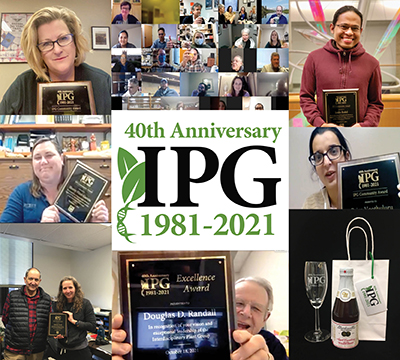
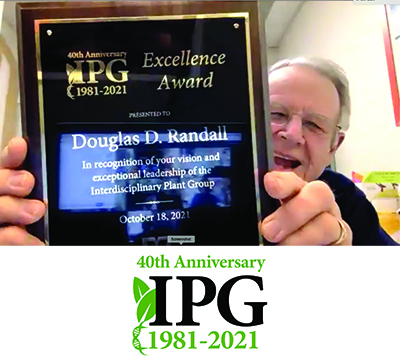
IPG Celebrates it's 40th Anniversary: 10/19/2021
More News >>
 About IPG